Chinese Calligraphy Brush Feng Shui: The Meaning of the Maobi Writing Brush
No object in a feng shui inventory is more quietly alive than a calligraphy brush. A scholar stone is stone. A paper stack is pressed fibre. A stick of ink is soot and glue. But a maobi is bound animal hair, the only one of the Four Treasures that changes through use. A new brush has no point at all; the point arrives only after the hair has been worn into shape by hand. That fact decides how the tool should be placed, cared for and read.
What a Maobi Actually Is
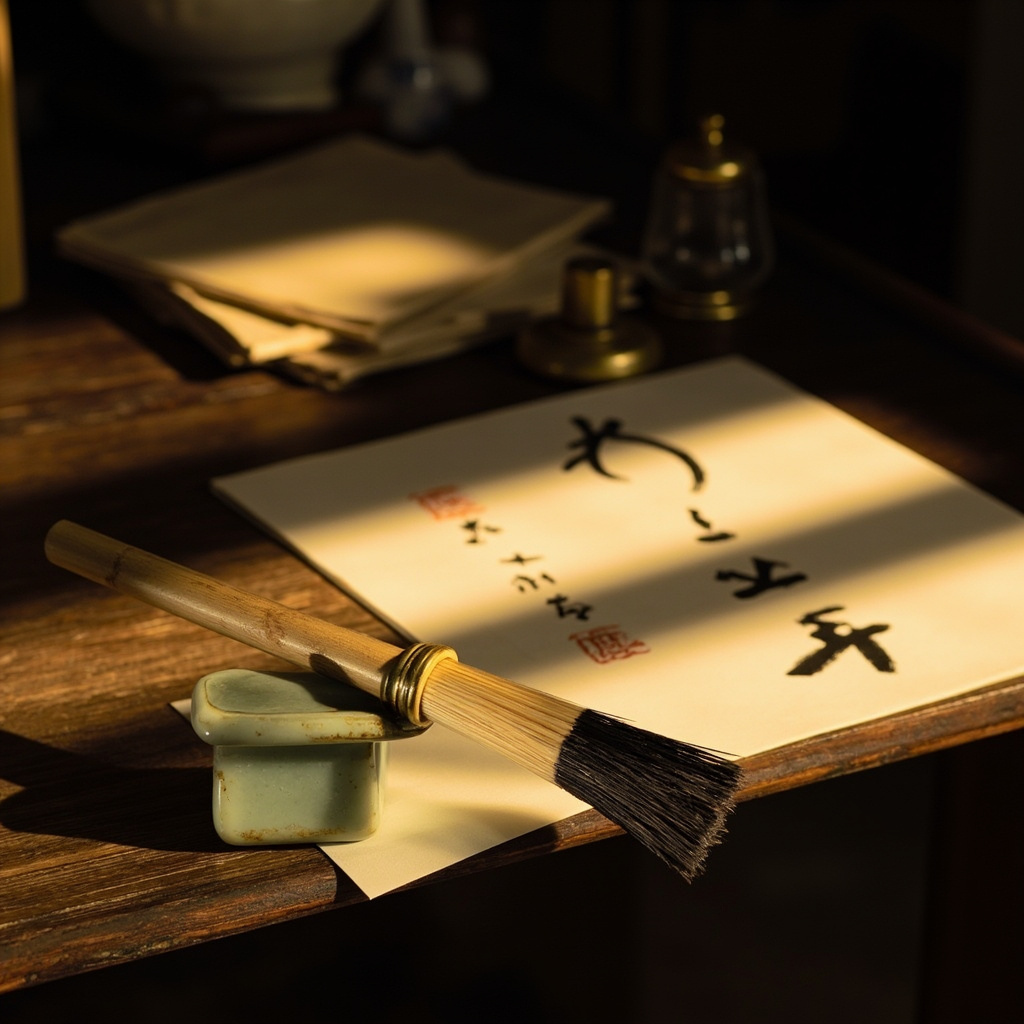
A maobi is a cone of hair, bound at its middle and seated in a bamboo or wooden shaft. What the brush lacks matters as much as what it does: no reservoir, no nib, no mechanism. It is loaded by being dipped, and the ink it holds is whatever the hair can hold. The stroke on the paper is the record of one dip and one press.
- Goat hair, the general standard, warm and resilient
- Rabbit hair, soft and absorbent, for fine regular script
- Weasel hair for a tight springy point, horse hair for a bold heavy line
The Only Living Treasure
The Four Treasures are usually listed as brush, ink, paper and inkstone, and read as four tools of equal standing. Look at the materials and the list breaks apart. The stone does not respond to pressure. The paper tears. The ink stick abrades but does not change character. The brush is made of an animal, and animal hair is the only material in the set with a root, a direction and a memory of how it was treated. Push it too hard and it is ruined, which no other treasure can be.
The Point That Does Not Exist Yet
A new brush is blunt. It has a shape but no point, because the point is not a property of the hair but of the hair’s wear. Every session of writing compresses the bundle, and the fibre already splayed finds the centre line first. The point emerges slowly out of use. That is why a master trims a brush: a trimmed brush is maintained, not damaged. Cut too much and the shape is taken away instead of sharpened.
Flying White
Press a dry brush across paper and the split hairs leave streaks of untouched white inside the stroke. The effect is called fei bai, flying white, and it is the most recognisable signature of the brush. Some writers cultivate it as a texture, holding the brush at a low angle and drawing fast. Others treat it as a fault and correct with more ink and pressure. Both work with the same fact: the brush has many hairs, and a stroke is what happens when some of them land and some do not.
Elasticity Is the Whole Point
Press a soft brush down and the hairs bend together into a flat edge; lift it and they spring straight again. That return is what makes a Chinese stroke legible. The press is the thick part, the release is the thin part, and the fine tip arrives when the brush is nearly upright and moving fastest. A stiff horse-hair brush barely bends and holds a blunt, heavy line; a soft rabbit-hair brush flexes into a hairline. The hair does the work of a spring, storing pressure and returning it as motion.
The Pot and the Water Underneath
A brush is stored upside down. It stands in its pot on its own tip, hair upward, the opposite of how every other writing tool is laid down, for a plain reason: a bent tip cannot write. Older brush pots hold a little clean water in the base, not to rinse it during use but to keep the hair from drying out overnight. The inkstone also keeps water, in a well ground into its face, and the two vessels sit side by side doing opposite jobs. One grinds a solid into a liquid; the other keeps the living thing wet.
The Only Tool That Touches Water, Wood and Flesh
By material the brush is the most mixed of the Four Treasures. The shaft is bamboo, which in the five-element system is wood: living, upright, seasonal. The binding thread belongs to the same family. The hair is animal. And the tip goes into water every time it is used, the only vessel of liquid in the whole set. The inkstone is stone with water in it; the ink stick is soot with water in it; the paper is dry plant fibre. The brush carries all three states at once, and it must be kept alive rather than merely kept clean.
Where It Belongs in the Room
Placement follows the material. Because the brush is wood in its shaft and carries the animal’s own warmth, it belongs in the east of a study, the wood direction, where morning light enters. It also belongs near the hand rather than on a shelf. A brush in a pot on a high display has stopped being used, and a stopped brush is a closed field: the tool is present, the discipline is not. On the working desk, beside the paper and the water, the brush is the hinge between the person and the page.
Keeping the Hair Alive
Care for a brush is mostly restraint. The daily routine is short:
- Wash the brush after use and comb the hairs straight with your fingers
- Stand it in clean water or dry dust, never in grey silt where grit settles into the root
- Change the water in the pot rather than topping it up, and never pull bristles that catch
When the point finally collapses and the hair no longer springs, the brush has reached the end of its useful life, so replace it rather than trim harder and hope. A brush written with daily will outlast one protected in a box.
The Hair and the Politics of Its Era
Brush makers have always been specific about the animal. Wolf hair was prized for centuries for its warmth and spring. Under the Qing, wolf hair became taboo for Han Chinese wearers, and goat hair moved decisively to the front of the workshop. The change survives in the objects: old brushes carry the politics of the century that made them. A hair brush is therefore not a generic tool but a dated one, and a collector can date a piece by the animal alone.
What the Brush Is For
Put the four treasures back together and the division of labour appears. The inkstone prepares the liquid, the ink stick supplies the substance, the paper receives the record, and the brush is the only one that touches the writer’s hand and the page at once. That makes the brush an honest measure of a room. A desk where the brush is in daily use, water changed, tip kept sharp, shows a person who is working. A desk where it has been sealed in a case for years shows the opposite, whatever else the room claims. The tool is small, but it reports honestly.