Chinese Village Water Well Feng Shui Meaning: The Jing That Gives Water Away
For most of Chinese history the well was the working centre of a settlement, and its feng shui meaning was practical before it was ever poetic. The Chinese village water well, the shui jing, was dug where the ground was sweet and the water rose. Its design encodes one hard-won idea: a household is judged not only by what it gathers, but by what it gives away.
What a Village Water Well Actually Is
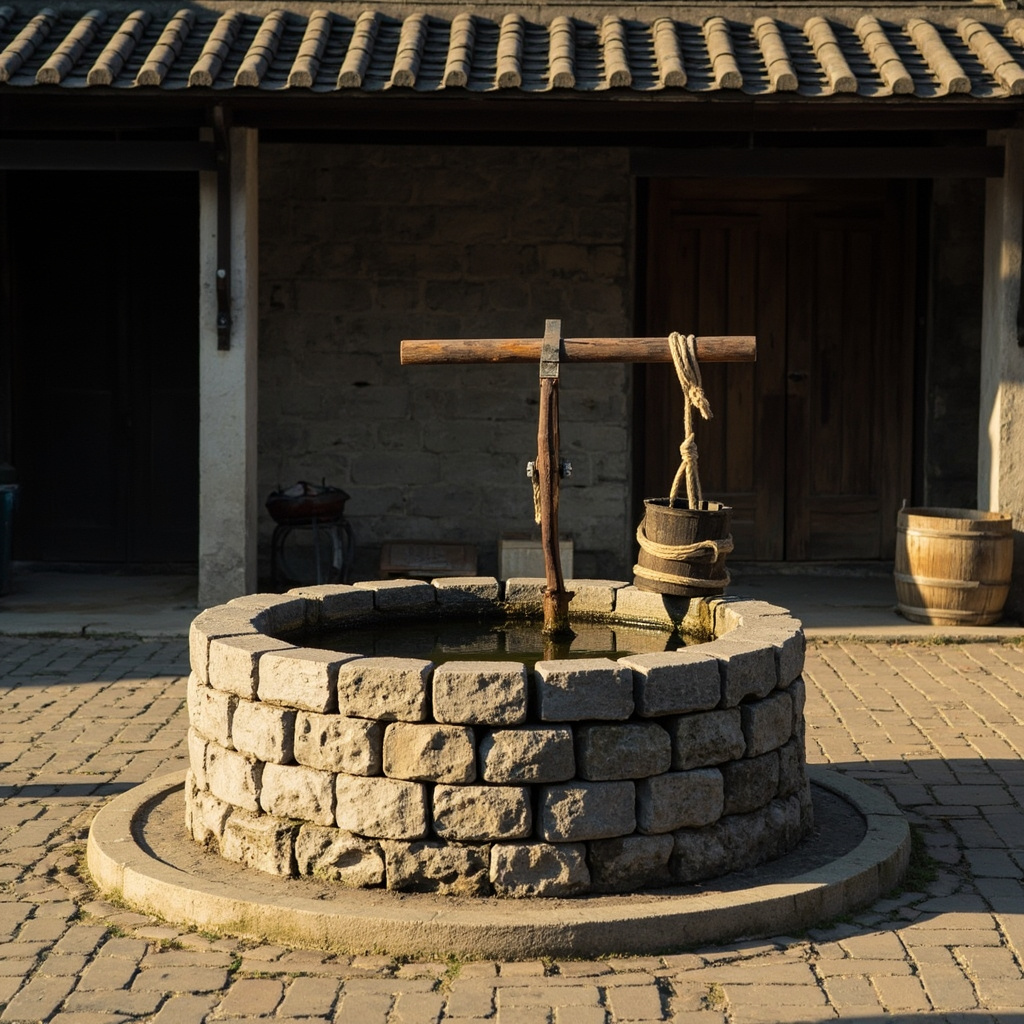
A Chinese village water well is a lined shaft sunk through hard ground to the water table, capped by a stone curb, and fitted with a windlass, a rope and a bucket. It was dug where digging had proved the water came up clean. The curb is the visible part and the least important one; the structure exists to reach a particular layer of ground and hand its water to whoever stands at the edge.
The Only Opening Meant to Empty the House
Every other opening in a building admits: a door, a window, a gate that takes a visitor and the weather. A well is the one opening built to take out, and that inversion is why it sits oddly in feng shui vocabulary. A house that only receives accumulates what it never discharges. A well is the discharge point: not a holder but an emptier, used repeatedly for as long as it works.
How the Well Is Built and Why the Curb Matters
Wells were sunk by digging a shaft, lining it with stone or brick so the walls would not collapse, and finishing the top with a curb of dressed blocks set in lime. The lining makes the shaft safe and the curb makes the mouth weather-tight; both also stop surface refuse from falling in. The digger followed signs: damp sand, a change in colour, a cool rising as the water table came closer.
The Lid, the Cover and the Mouth You Choose
A well can be left open, or covered with a fitted stone, a wooden lid, or a small roofed shelter. Traditional practice leaned strongly toward covering. An open shaft is a mouth into the ground with nothing between it and the water, and it takes leaves, insects, birds and dust. A well left open was poor in feng shui terms, because the opening that draws clean water can equally draw in whatever else is loose in the air. A mouth is defined by what you let pass through it.
What the Well Reports About the Ground
A well is a measuring instrument before it is a water supply. Once sunk it reports what no object on the surface can: how deep the water lies, whether the level rises after rain or stays flat through a dry month, and whether the water is cold or clear. The Chinese vocabulary distinguishes a sweet well from a bitter one, and that carries the whole argument: the same source can be auspicious or harmful depending on what the ground gives it.
Sweet Water and Bitter Water
Sweetness was a matter of the ground. Through clean gravel and sand the water tastes flat and easy; through clay, brine or old refuse it tastes bitter, and in dry regions it carries minerals that make it undrinkable. Villagers settled where sweet water reached the surface, and records kept the distinction because it decided where families stayed. Read as feng shui, this is a judgement rather than a chore: you do not argue with the taste of the ground, you move the well or leave the site.
The Windlass, the Rope and the Daily Labour
Drawing water was work. A well was fitted with a windlass or winch, a wooden drum on a frame above the shaft, with the rope wound onto it and a bucket hung at the end. The word for winding it is still in common Chinese use for that pull-and-turn action, and the mechanism gave the well its name. Two people often worked it, one drawing and one carrying, and every household kept a fixed rhythm around the shaft. The well was never a symbol standing in a courtyard, but a chore that structured the day.
What a Well Means for a Home Today
Read as feng shui, a well describes a household with a healthy relationship to its own abundance. It says the resources of a house are meant to move rather than accumulate, that what is taken in should be put back into circulation outside the walls, and that a well left capped for years or walled over has lost what made it meaningful. The reading is about the direction of flow, not the water itself, and about a giving that was structural rather than charitable.
Where It Belongs, and Where It Does Not
Placement follows function, and the function of a well is not decorative. In the original setting the well stood where the underground water rose, and the buildings were arranged around it rather than the other way round. Any arrangement that relocates a well for symmetry or a view has broken the logic that gave it meaning. If you own a real well, treat it as infrastructure: keep it covered, keep the cover clear, keep the ground swept. A water feature answers a different question entirely.
Common Misunderstandings
Four mistakes are common, and each replaces the object with a better known one:
- It is confused with a fountain. A fountain moves water deliberately, for the eye; a well moves it because the ground requires it.
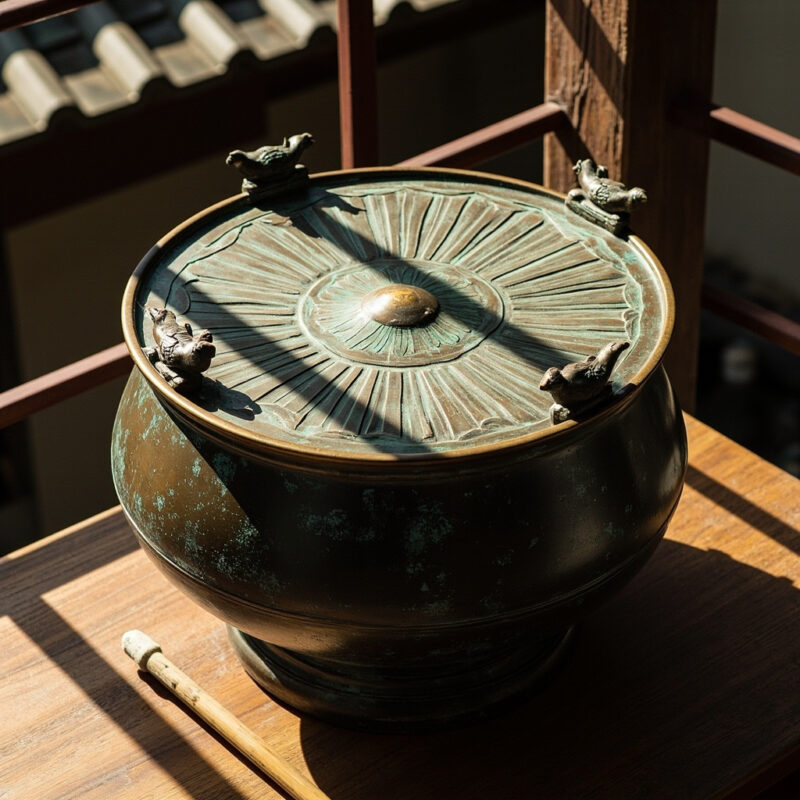
- It is confused with a stored water vessel. A vat holds water in order to keep it; a well holds nothing, by design.
- It is treated as a decorative garden ornament. A capped, unused well is the object with its purpose removed.
- Its shape is read as a feng shui diagram. The lining and curb are engineering; the water table beneath is geology.
Caring for a Well You Actually Use
If the well is real and in use, three checks matter more than any arrangement:
- Keep it covered when it is not being drawn, with a lid that seats properly, so nothing falls in.
- Have the water tested before treating it as drinking water, especially after heavy rain or building work nearby.
- Clear the platform and drainage around the curb, so used water runs away from the mouth.
None of this is mystical. It is the rule the old villages worked by: the well must be managed more carefully than any other opening, because everything else about it is invisible.
A Closing Thought
The Chinese village water well survives as the plainest possible statement of how a home should relate to what it holds. It takes in nothing and gives away daily, and it is judged by what comes up rather than by how it looks. For anyone arranging a home, that is a useful correction, and it asks for no bagua, no compass and no ceremony.