Chinese Black Tortoise Feng Shui Meaning: Xuanwu and the Guardian of the North
The Black Tortoise is the least known of the four Chinese directional guardians, and the one Western readers most often misread. It is not a black turtle kept as a pet, or a protective dragon in armour. It is the north, made visible: the winter quarter of the sky, the water element, the trigram Kan, and the guardian that stands behind a dwelling and holds it up. Its name, Xuanwu, contains no character for tortoise or snake, and understanding why it names the winter rather than the animal is the key to everything else.
The Fourth Guardian and the Northern Quarter
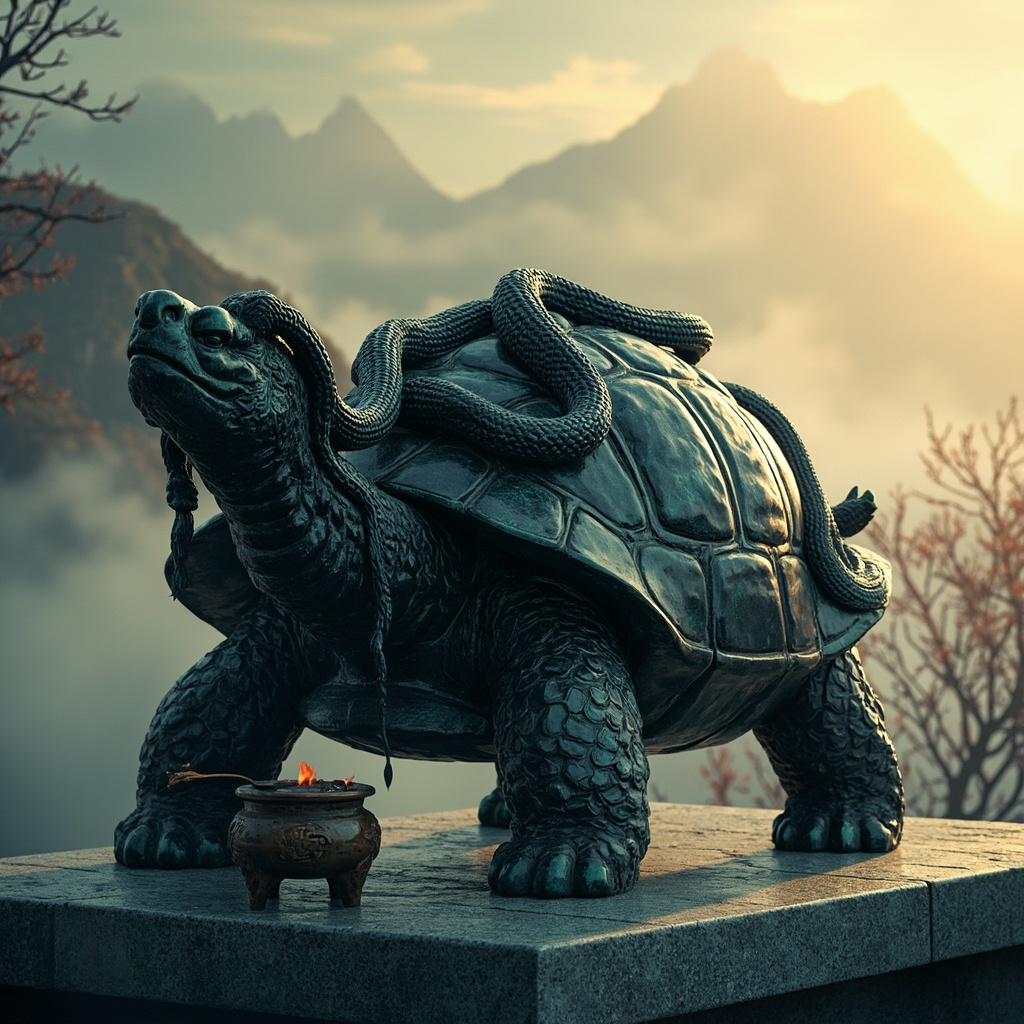
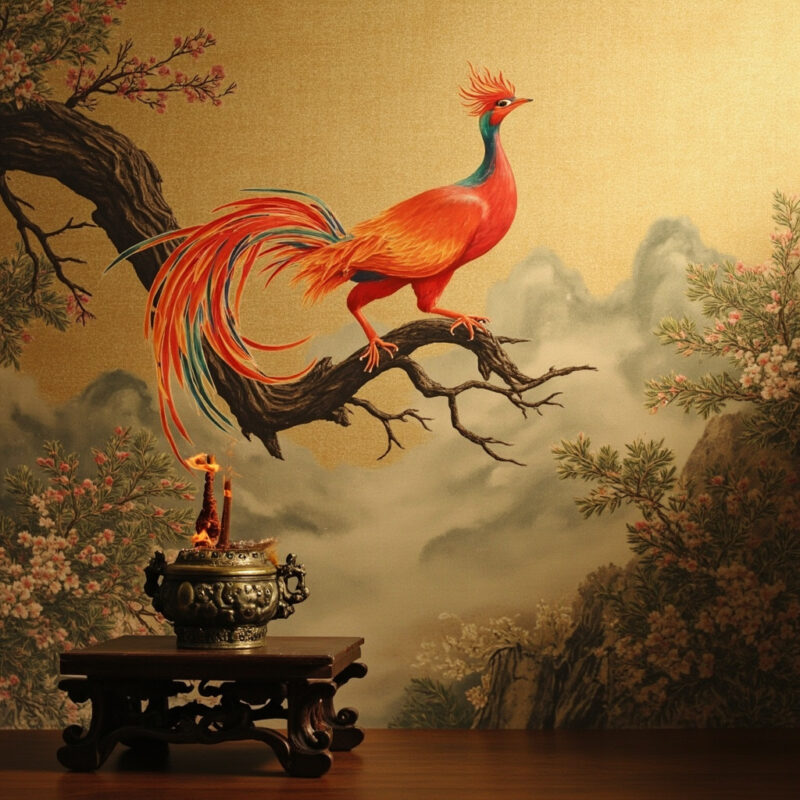
Chinese cosmology divides space into four seasons, four colours, four elements, four directions and four animals. The Azure Dragon holds the east, the spring and wood. The Vermilion Bird holds the south, the summer and fire. The White Tiger holds the west, the autumn and metal. The Black Tortoise holds what is left: the north, the winter, water and the colour black. Each animal is a full statement about a quarter of the year rather than a mascot for it, which is why the tortoise carries a snake rather than standing alone.
A Tortoise and a Snake Entwined
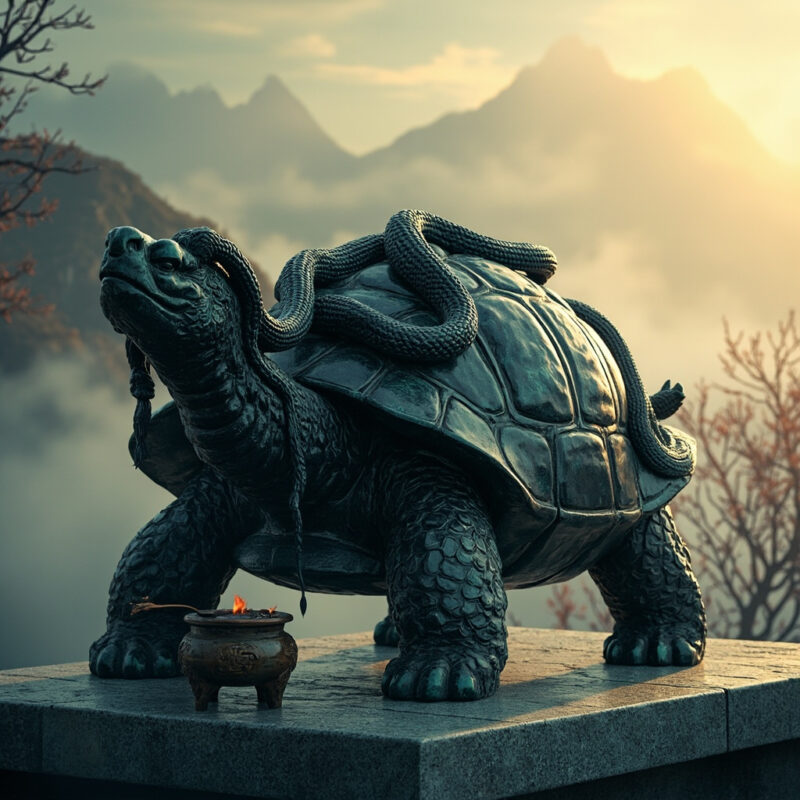
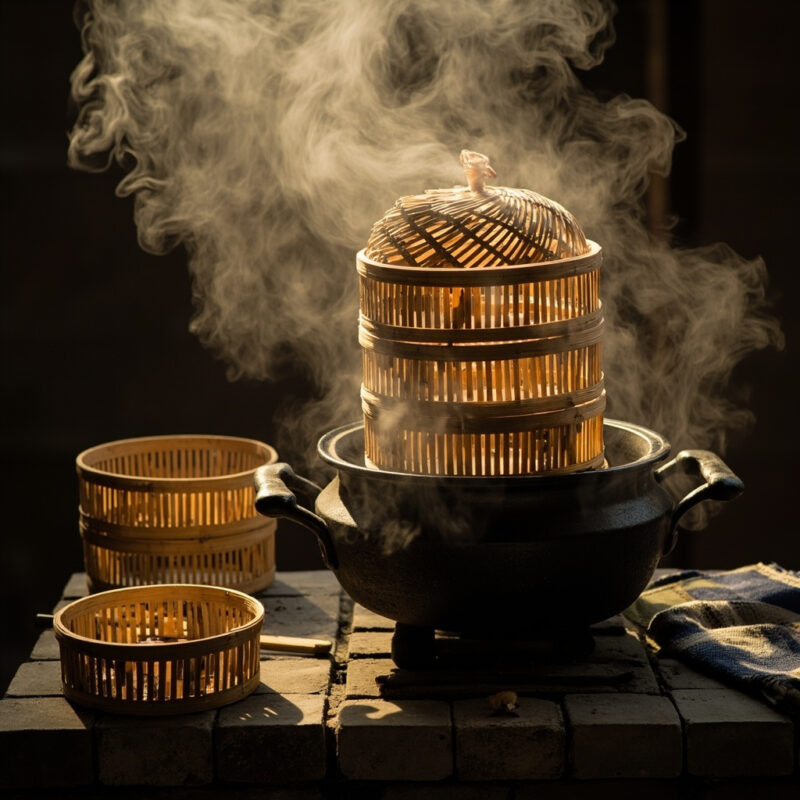
The emblem is always a pair. A tortoise, turtle or softshell is shown with a serpent coiled around it, the two bodies overlapping in a single composite creature. Classical descriptions treat the combination as meaningful in itself, and some readings take the entwining as a picture of inner struggle, two powers held in tension rather than harmonised. The tortoise contributes longevity, stillness, patience and the slow accumulation of weight over years; the snake contributes the quick, penetrating, secretive movement it lacks. Together they describe endurance that is not passive.
Why the Name Means Winter Rather Than Tortoise
Neither character in the name Xuanwu literally denotes a turtle or serpent. Xuan carries the sense of dark or mysterious, and wu means martial. The name describes the season, because tortoises and snakes hibernate through the cold months, so the pair came to stand for winter as such. Later astronomical writing preferred the term Dark Warrior or Black Warrior, partly because the word for tortoise could be used as an insult. The emblem is therefore a calendar before it is a creature, naming the closed, slow, deep part of the year.
The Seven Mansions of the Black Warrior
Each guardian rules seven of the twenty-eight lunar mansions, the stretches of sky the moon crosses in one sidereal month. The northern seven run from the Dipper through the Ox, the Girl, Emptiness, Rooftop and Encampment to the Wall, crossing Sagittarius, Capricornus, Aquarius and Pegasus. These are the mansions of the old yin, consulted when a chart or a site is read for what is hidden, guarded and slow rather than what is prominent, and they sit in the background of every calculation about what lies behind a person.
From Emblem to God: Zhenwu of Mount Wudang
By the close of the Five Dynasties the northern symbol had acquired a biography. Under the name Zhenwu, the Perfected or True Warrior, it became a deity of the Daoist pantheon, and Mount Wudang in Hubei became his mountain. The Song dynasty gave him a full hagiography: a prince who refused the throne, left his family, cultivated on the mountain for forty-two years and ascended in daylight, whereupon the Jade Emperor ordered him to guard the north. In Journey to the West he appears as a northern king served by a Tortoise General and a Snake General; in the Ming the Hongwu emperor ordered annual sacrifices on the third day of the third and ninth months.
The Black Tortoise in the Landscape
Early geomantic practice, the Form School, read landform directly, and the tortoise was its most important animal. The ideal site sits in an armchair. Behind the building stands the Black Tortoise, a solid range of hill or mountain that shelters it; in front lies the Vermilion Bird, a lower hill or footstool that contains the energy; to the left the craggy Azure Dragon; to the right the compact, crouching White Tiger; at the centre the Ming Tang, the bright hall where qi gathers. The Book of Rites states it plainly: a Red Bird in front, a slow-moving Tortoise behind, the Azure Dragon on the left, the White Tiger on the right.
The Armchair of a Home
The same model works indoors, which is where most household practice is actually done. In a room the tortoise becomes the solid wall behind the bed, the desk or the stove, and the phoenix the active wall with the window or door. The best command position places a person with their back to solid support, facing the room’s most active part while still able to see the entrance. Burial custom followed the same logic: the dead were laid with heads toward the north and the living faced south, and the mound over a grave was the tortoise of the later tradition, the back of the site protected against the cold northern wind.
What the North Governs in a Personal Chart
In Tian Xing feng shui the north is read as the register of what is concealed rather than what is displayed. It governs the foundations of a life: the family line behind a person, accumulated reserves, the slow years of work that show nothing for a long time. Its correspondences run to water, the kidneys, bladder and skeleton, and to Mercury in the planetary scheme. It is the quarter consulted when a question concerns endurance, secrecy, protection or what will hold when nothing else does, which is why Daoist tradition associates it with longevity rather than luck.
Working With the North Direction
Advice for the north sector follows from all of the above. Traditional placement treats it as a place of support and storage rather than display, so it takes heavy, low, weighted things rather than open glass shelves. It wants stillness and accumulated objects, and no fire feature in the same sector, since fire and water are the classical opposites.
- Place heavy, solid items in the northern part of a room rather than light or fragile ones.
- Keep it calm and dim rather than loud, bright or animated.
- Avoid a water feature and a fire feature in the same sector.
- Use it for what is stored and kept safe, not for what is displayed.
- One tortoise image is enough, and it works best in a solid, grounded setting.
The Pair That Cannot Be Separated
Read as a position rather than a mascot, the Black Tortoise says: this is the north, this is water, this is winter, this is the part of the house that is behind. A tortoise and a snake held together is a precise description of what the tradition asks that quarter to do, which is to hold the weight, keep the record and endure what the visible half of a life cannot. The emblem closes the four-guardian set the way a keystone closes an arch, and once it is in place the whole compass becomes legible.