Chinese Sea Willow Feng Shui Meaning: The Golden Silk Coral of the Southern Seas
Among the materials worked into prayer beads and protective bracelets, sea willow occupies an unusual position. It is not jade, and not the precious red coral reserved for fine jewellery. It is a soft coral from the southern seas, honey gold in colour, and it reaches China through trade rather than excavation. That origin shapes how feng shui understands it: an imported material, worked locally, and worn for the protection of journeys and open water.
What Sea Willow Actually Is
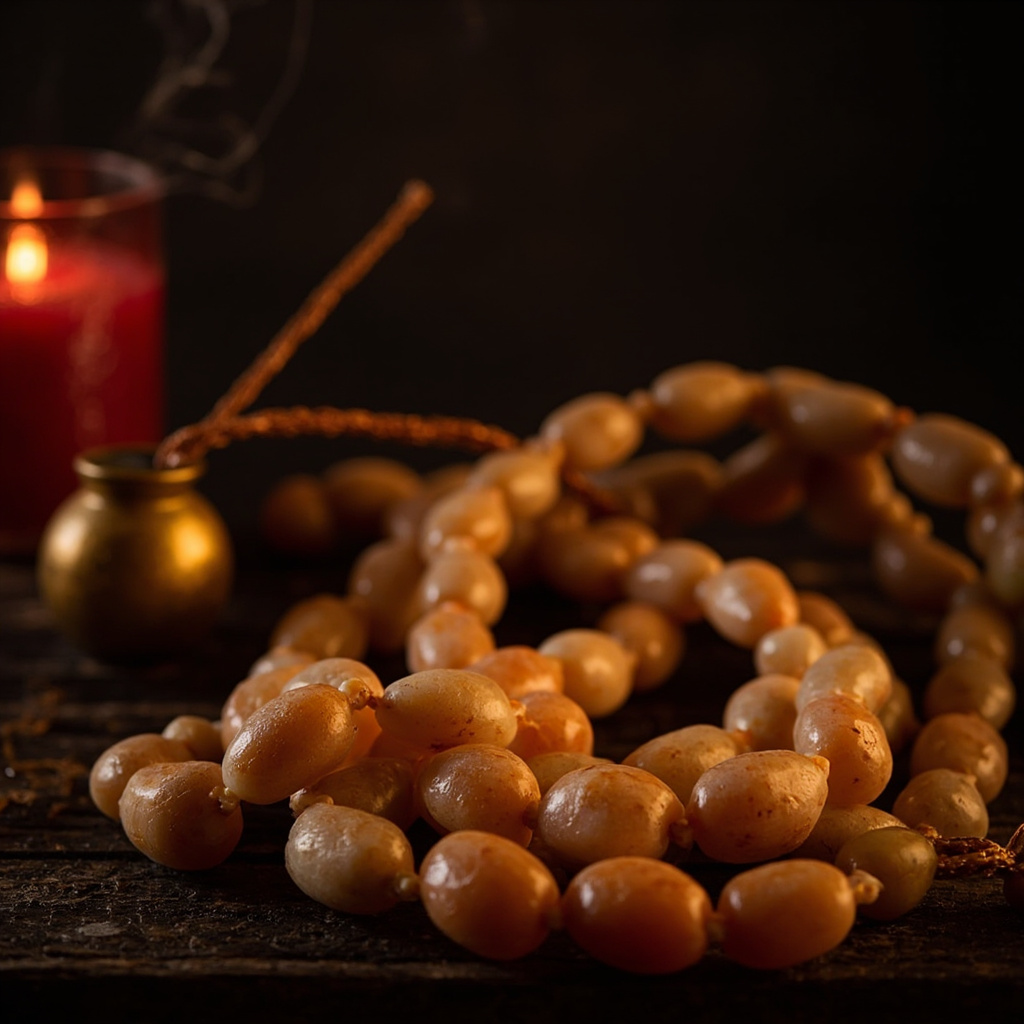
Sea willow, known in Chinese trade records as hai liu, is a gorgonian-type soft coral with a finely branching, fan-like skeleton. Worked and dried, the branches separate into round beads that retain the fine linear striations running along the coral’s growth. Colour ranges from pale straw to deep honey gold, and those darker striations give the material the streaked appearance that earned it the name golden silk coral, or jin si hai liu. The name is descriptive rather than mystical. Hai is sea. Liu is willow, referring to the drooping branching habit of the living animal, like a shrub bending in a current.
It is worth distinguishing from precious coral, a stony material used sparingly in courtly jewellery. Sea willow is a different animal, more plentiful and much softer to work.
How It Reached Chinese Workshops
Sea willow reached Chinese shores through the maritime trade of the southern ports and settled into the workshop districts of Chaoshan in Guangdong and the coastal towns of Fujian. Those were the centres of bead making for centuries, working not only jade and agate but imported organic materials: ivory, horn, boxwood, mother of pearl, amber and coral. The reasons were practical as much as aesthetic. Soft coral carves easily, takes a high polish, and can be pierced and strung without the chipping risk hard stone carries.
Sea Willow in Taoist Bead Practice
Once in the hands of bead makers, sea willow was made into bracelets, hand-strings and strung prayer beads in the ordinary way. In southern practice it was often carved with Buddhist imagery, a small dragon or seated figure, and worn as an everyday bracelet rather than a ritual object. Where a household altar was involved, the same beads might be strung as a mala for counting. The Taoist use is less about formal doctrine than protection and steadiness. In feng shui practice a bead worn on the body is treated as a constantly present influence on the field around the wearer, and a material carrying water and metal associations is read as settling rather than stirring.
The Elemental Reading: Water Carrying Metal
In the five-element framework, sea willow sits in an interesting double position. Its origin is water: it is taken from the sea and it retains the character of a living thing grown in salt water. Its colour is gold, which reads as metal, and its polished surface reflects light rather than absorbing it. Water over metal is the productive relationship in the generating cycle, which is why this pairing is treated as favourable rather than neutral. Water feeds metal, metal gathers and holds value, and the material therefore carries an implied function: something drawn from the sea that supports the accumulation of wealth.
Protection for Journeys and Open Water
The most consistent association with sea willow is protection on the water. Coastal Fujian and Guangdong have always been seafaring communities, and a coral bead carved to hold a blessing was a natural object to take on a voyage. The branching structure was read as an ability to catch and disperse harmful influence, the way a net catches what is thrown into it. For people who no longer travel by sea, the same reading transfers to any period of change. A sea willow bracelet is not usually described as a charm for the household, but as something to wear when you are going somewhere, starting something, or moving through an uncertain period.
Four Ways the Bead Is Worn
The material is adaptable, and feng shui practice has settled on a small number of forms.
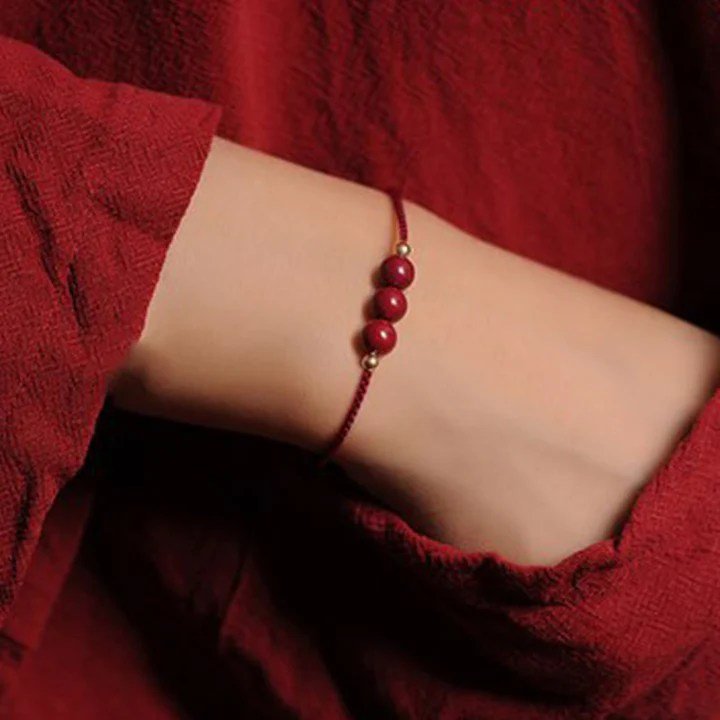
- As a single-bead hand string, one coral bead on a knotted cord, worn at the wrist on travel days.
- As a wrap bracelet, several strands of small round beads built up to a substantial weight on the wrist.
- As a mala, strung to a standard count for counting recitation, with a marker bead to track the cycles.
- As a carved pendant, the branch form cut into a dragon or protective figure and worn at the chest.
The hand string is the most modest form. The mala is the most formal, and the one to choose when the bead serves a specific practice rather than acting as ornament.
Size, Count and Weight
Sea willow beads are commonly produced from around ten millimetres up to twenty. The choice is practical rather than symbolic. Smaller beads give a finer, lighter bracelet that can be worn through a working day; larger beads are heavier, more visibly a piece of ritual jewellery, and give a mala a substantial presence in the hand. Weight is the factor most buyers underestimate. Coral is light for its volume compared with jade, but a wrap of larger beads still adds noticeable weight, so anyone new to beads should begin at the smaller end.
Caring for a Soft Coral
Sea willow is a porous organic material, more easily damaged than jade or agate. A few habits protect it well.
- Keep it away from perfume, hairspray and scented body products, which dull the polish and stain the material.
- Take it off before washing, and wipe it with a dry or barely damp cloth rather than soaking it.
- Avoid knocking it against a hard surface; the polish bruises easily along the edges of the branches.
- Store it flat or loosely coiled in a soft cloth pouch, away from direct sunlight, which fades the gold over time.
What Sea Willow Cannot Do
Honesty matters more than enthusiasm here. Sea willow is a well-made natural material with a genuine history of use, but it is not an active device. It does not redirect qi, it does not change the structure of a house, and no quantity of beads will substitute for a proper reading of a space or a person. What it does offer is steadier and more durable than a cure: a documented craft tradition, a trade history and an established meaning within a working system of feng shui and bead practice. When a person chooses it, they are carrying a piece of that tradition with them, with the seriousness the original makers gave it.
A Material With Its Own Weather
The reason sea willow has survived in Chinese bead work when many other materials have not is that its appeal is not only symbolic. It is a light, warm-toned, finely striated material that works in every register from a single hand string to a carved pendant, and it takes a polish few organic materials can match. For anyone beginning with Taoist bead practice, it is an unusually good first material: affordable, honest about its own nature, and asking nothing of the wearer beyond care.