Chinese Fu Character Feng Shui Meaning: The Written Blessing
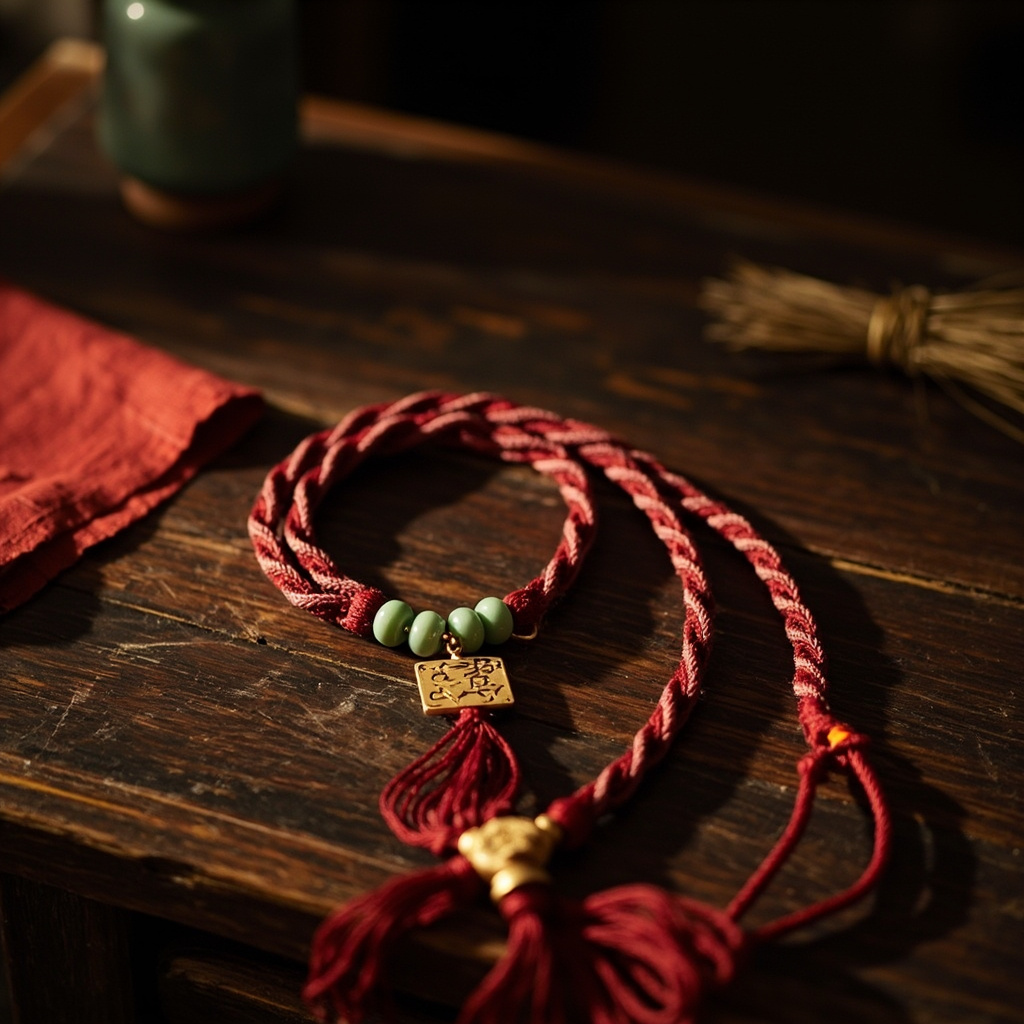
The fu character is the most common mark in Chinese visual culture and the one most Western visitors cannot name. A gold plaque on a bracelet, a square of red paper on a door, a seal pressed into a letter: each carries the same compressed form of the word for good fortune. Fu character feng shui meaning is therefore not one tradition but a family of them, and the differences between these uses tell you more about the object than the character.
What the Fu Character Actually Is
The character is read fu, and it is built from two parts: a left-hand radical associated with ritual and blessing, and a right-hand side of a horizontal stroke above a mouth and a field shape. It is not a picture of luck but an ideogram for an abstract noun, asked to stand for a whole condition of abundance and satisfaction. A written character is treated as an active object rather than a label, so a graph carrying the right meaning is treated as carrying that meaning with it. That is why the fu character ends up on doors, in wallets and on jewellery.
Upright and Inverted, Two Different Readings
A fu character pasted upside down is a deliberate act, and one of the most widely misread details in the practice. Upright, the graph is a plain invocation of good fortune, the standard New Year door decoration. Inverted, it reads as the phrase fu dao le, the fortune has arrived, because arriving upside down is how it has arrived. It is a rebus rather than a reversal of meaning. Which one a household chooses says how it reads the custom: a formal blessing to be displayed, or a lucky joke about fortune being late.
Where the Character Belongs in a Home
Placement is the whole of the feng shui argument here, because the character is always attached to something. The traditional position is a square of red paper on the outer door of a home or shop, at or above eye level, and the choice of door matters more than most people expect. Placing the fu inward turns it into a private household sign and loses that outward-facing function. In a home it is often paired with door gods, the fu taking the quieter role of a benediction beside two guardians.
The Character and the Twelve Zodiac Animals
The zodiac is the other half of the fu character’s working life, and the connection is structural rather than decorative. The Chinese year runs on a twelve-year cycle, each named for one of twelve animals: rat, ox, tiger, rabbit, dragon, snake, horse, goat, monkey, rooster, dog and pig. That cycle sits inside a framework of ten heavenly stems and twelve earthly branches, and every branch carries an animal as well as a double hour. An amulet carrying both the fu character and a carved animal combines a general blessing with a specific year sign: the animal names the sign, the fu tag asks the general case.
The Five Element Reading of Red, Gold and Green
Colour carries the elemental scheme in a way that makes this amulet easy to read. Cinnabar is red, and red is the fire element: heat, expansion, visibility, a reputation that is spoken about. Hetian jade is green, and green is the wood element: growth, beginning, the patient disposition of a plan that takes years to mature. The gold spacers are metal, the element that cuts and clears. A piece made of red, green and gold is not a random palette. It holds fire, wood and metal together, each a different register of the same wish.
Cinnabar and Hetian Jade in the Same Bracelet
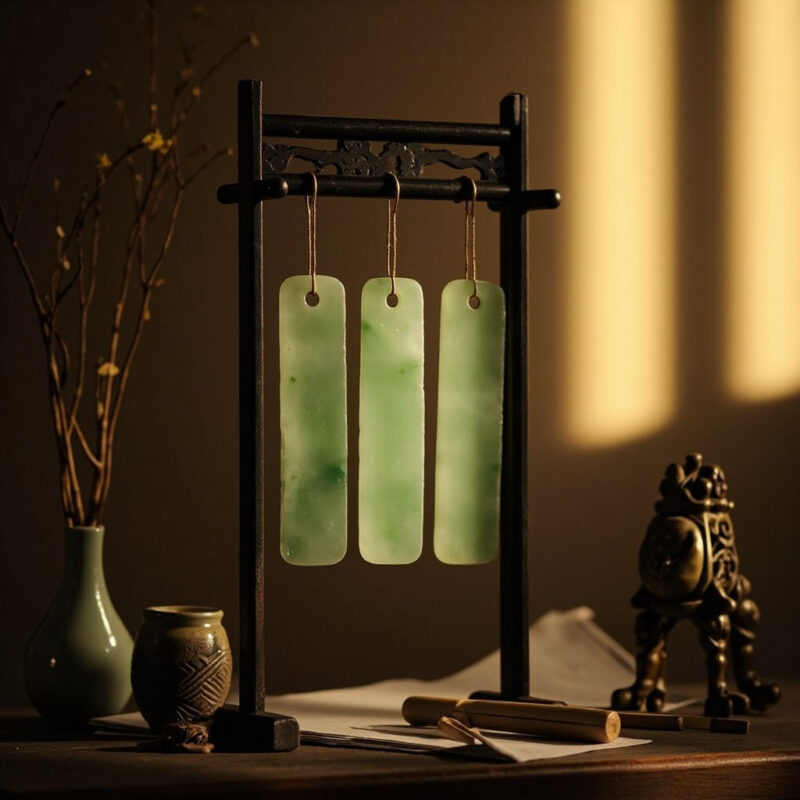
The two materials do different work. Cinnabar, the mineral source of vermilion pigment, has been worked into jewellery and ritual objects for thousands of years, and is traditionally treated as the most protective material available. Hetian jade, the fine white nephrite from the Hotan river basin in Xinjiang, is treated instead as the material of wishes, because it strengthens what the wearer intends rather than overpowering the surroundings. Together they make a readable pair, protection from the outside and intention from the inside.
The Consecration Ritual
Some versions of this amulet are sold as consecrated rather than merely finished, and the difference is a real ritual rather than a marketing adjective. The consecration performed by Taoist priests involves chanting, an infusion of energy into the object, and a sealing of that charge. This matters practically, because it explains what the owner is asked to maintain. A charged object is kept away from water and replaced or re-consecrated once it is worn through.
How the Amulet Is Worn
It is worn on the red cord at the wrist, and the cord matters most in practice. The knotted braid is meant to be tied rather than fastened with a clasp, and a hand-worked sliding knot lets the bracelet sit snugly without the tension a fixed loop would put on the beads. Because the rope and the tag are the fragile parts, the piece comes off before sleeping, swimming and showering, and is wiped with a dry cloth rather than rinsed. A pouch or drawer away from light protects the gold and the polish.
What the Fu Character Cannot Do
It is worth being plain about the limits, because the trade around this object is full of claims it cannot support. The fu character does not decide an outcome, and jewellery is not a substitute for a plan, a contract or a decision. What it does is more modest: it marks the intention, reminds the owner of it daily, and gives that intention a form that can be respected, worn and cared for. A written blessing that is displayed, handled and maintained is understood to work on the person who keeps it rather than on the circumstances around them.
Choosing One Well
Several physical facts can be checked before money changes hands, because cheaper versions fail on the same points every time.
- Look at the fu tag closely, since a blurred or badly cast character is the commonest fault of all.
- Examine the jade beads for even translucency, rejecting any with a chalky look or dye in the cord holes.
- Confirm the cinnabar bead is carved rather than moulded, and the animal on it legible.
- Count the gold spacers, which should sit evenly between the beads, not bunched at one end.
- Pull the cord and check the knot holds under load, since a badly tied braid fails first.
- Ask whether the piece has been consecrated and by whom, so what you buy is what is described.
The fu character is the most widely used piece of Chinese graphic art in the world, and also the one most often reduced to a decoration with no working parts. A well-made amulet is the opposite of that: red cord, green jade, carved vermilion, gold tag, a legible character and a beast carved rather than printed. Read fu character feng shui meaning as a description of what the object asks of its owner. Choose the parts, keep the cord dry, and let the character work.