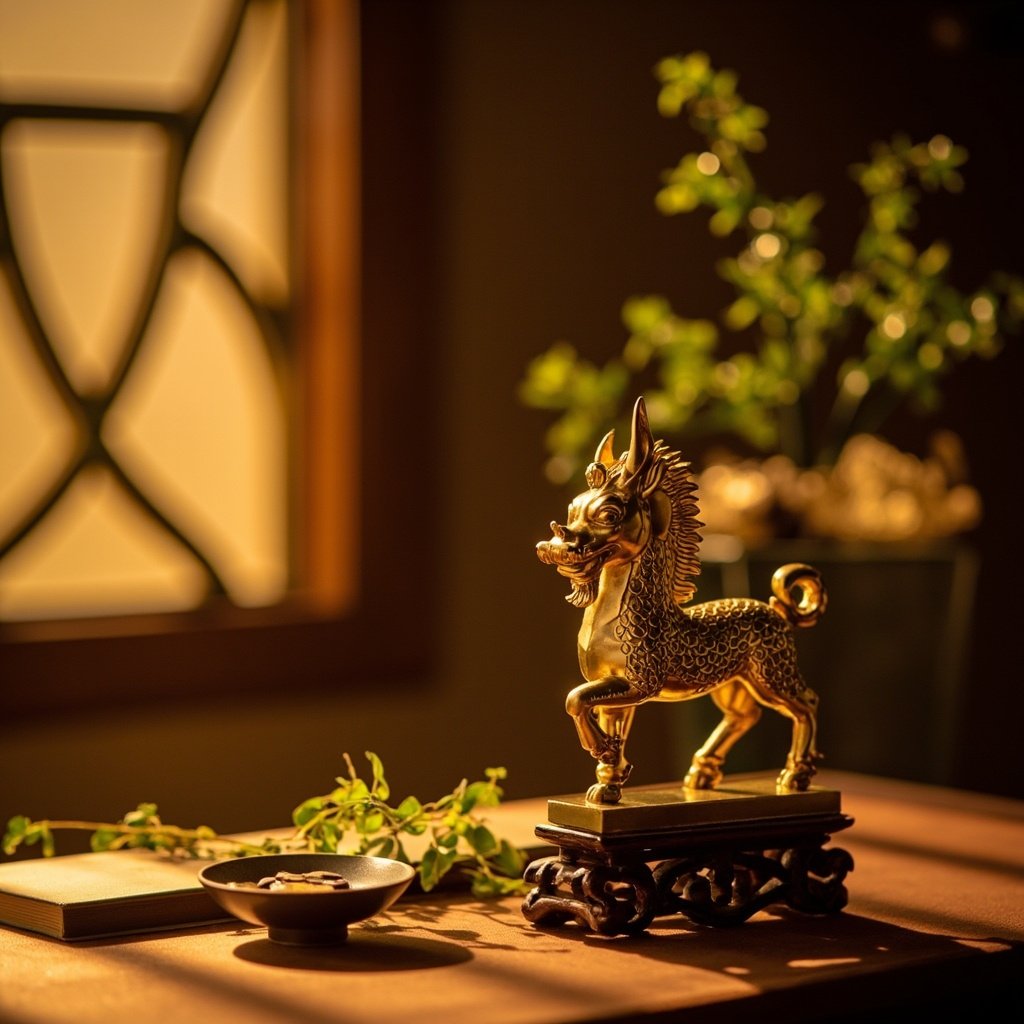

Qilin Feng Shui Meaning: The Chinese Unicorn of Protection and Prosperity
The qilin is one of the four benevolent creatures of Chinese mythology and one of the most respected symbols in feng shui. Unlike the fierce guardians that frighten trouble away, the qilin is said to appear only near wise rulers and virtuous households. Placed with care, a qilin figurine is believed to calm a space, shield its people and quietly invite prosperity. This guide explains the qilin feng shui meaning, where to place one and how to choose a piece that suits your home.
The Qilin in Chinese Myth
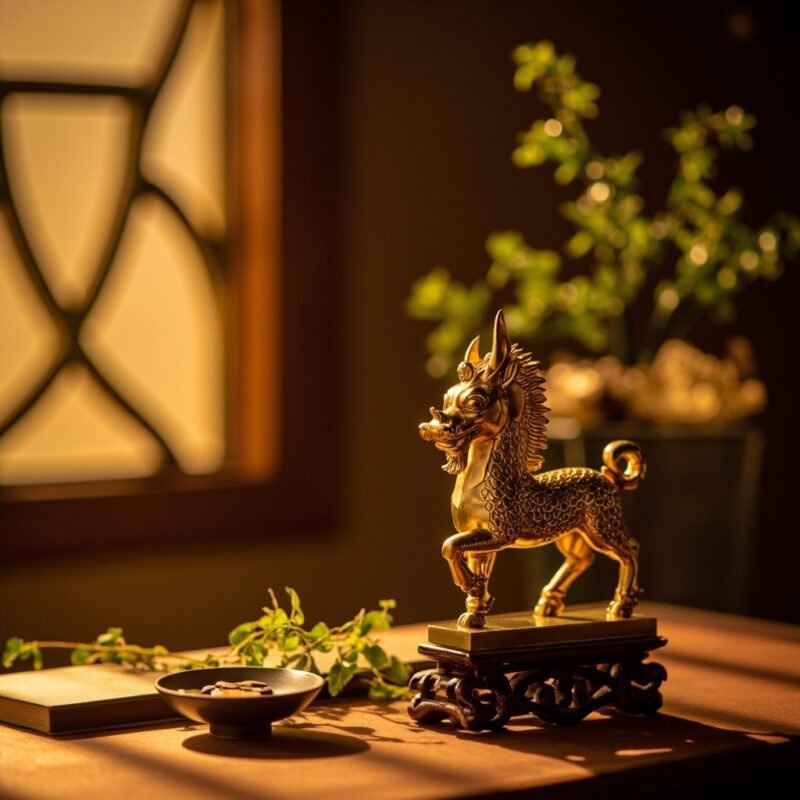
The qilin, sometimes written kylin, is usually translated as the Chinese unicorn. It is a chimera: the body of a deer, the scales of a dragon, the hooves of an ox and a single horn rising from its forehead. Classical texts describe it as gentle by nature, walking without crushing living grass. That gentleness is the key to its feng shui role. Where a dragon commands and a tiger defends, the qilin harmonises. It stands for benevolence, justice and good government, so in a home it becomes a steady, protective presence rather than an aggressive one.
Where the Qilin Comes From
The creature appears in texts that predate the common era and was long treated as an omen of peace. Legend holds that a qilin appeared to the mother of Confucius before his birth, and the sage remained associated with the beast throughout Chinese history. Because of that story, the qilin became tied to scholarship, moral character and exceptional children. Emperors adopted it as an emblem of rightful rule, while ordinary families kept qilin images in the hope that their own children would grow up wise and honourable.
What the Qilin Symbolizes in Feng Shui
- Protection without aggression. The qilin senses approaching harm and deflects it, which makes it a favoured guardian for households with children or elderly relatives.
- Benevolence and harmony. Its gentle nature smooths conflict, so it is often used when a family is recovering from tension or grief.
- Prosperity and career luck. As an emblem of just reward, it supports steady advancement rather than sudden windfalls.
- Fertility and family line. Pairs of qilin are traditional wedding gifts associated with healthy descendants.
- Wisdom and scholarship. Students keep small qilin figures on study desks, in the same spirit as the Wen Chang pagoda.
Qilin vs Dragon, Pixiu and Lion
- Qilin — a hoofed, scaled beast with one horn; gentle, protective and linked to virtue and children.
- Dragon — a celestial authority symbol, best for status and momentum.
- Pixiu — a winged wealth beast whose task is to gather money; it is not a general guardian.
- Guardian lion — a fierce sentry placed in pairs at entrances, used to repel rather than to soothe.
If your aim is money alone, a pixiu is the more direct choice. If your aim is a calm, protected home, the qilin is the better one.
Where to Place a Qilin for Protection
- Near the main entrance, facing outward, to meet unwelcome energy before it enters.
- In a hallway that runs straight from the front door to a back door, where chi moves too quickly.
- In a family room or a study, on a shelf at eye level or above.
- Beside a home office desk, angled slightly away from the seat.
- In the living room on a side table, where it can watch the main gathering area.
Traditionally the qilin faces out through doors and windows, but never directly at a bed or a dining seat.
Qilin for Career, Study and Family
Placed in the career or helpful people area of the bagua, a qilin is used to attract mentors and fair treatment at work. In a study it pairs well with a Wen Chang tower and a stack of books, a combination aimed at concentration and exam luck. For family matters, a pair of qilin in the relationship corner is a classic remedy for a home that feels divided, and in Chinese tradition the same pair is given to newlyweds with a wish for healthy children.
Choosing Your Qilin: Materials and Elements
Bronze and brass are the most traditional materials, and their metal element suits western and north-western placements. Jade and green stone carry the wood element and are preferred for study and growth. Wood carvings belong in the east or south-east, while cinnabar-red pieces are used when protection is the priority, in keeping with Taoist consecration practice. A single qilin is enough for most homes; pairs are reserved for entrances and wedding gifts. Choose a size that matches the room, since an oversized statue in a small flat can feel heavy while a tiny figure on a large console disappears.
How to Activate a Qilin Figurine
- Clean the piece with a soft dry cloth and place it in its chosen spot.
- Set a small dish of clean water and a bowl of rice or coins beside it as an offering.
- Light incense and state your intention simply: protection, harmony, or support for study and exams.
- Leave the offering for a day, then remove it and keep the area tidy.
- Refresh the intention at the start of each lunar year.
Common Mistakes to Avoid
- Facing a qilin directly at a bed or a dining chair.
- Placing it in a bathroom, kitchen or cluttered storage area.
- Using a broken or chipped figure; replace it rather than repair it.
- Crowding several protective beasts into one small corner, which muddles the intention.
Frequently Asked Questions
Is a qilin the same as a pixiu?
No. Both are mythical beasts, but the qilin is a gentle guardian linked to virtue and children, while the pixiu is a wealth-gathering creature with wings.
Can I keep a qilin in my bedroom?
A small qilin on a high shelf is acceptable, but it should never face the bed.
Final Thoughts
The qilin feng shui meaning rests on a simple idea: protection need not be fierce. One well-placed figure can steady a home, support a student and welcome prosperity without adding tension to a room. Choose your material by the element you want to strengthen, place it with care, and let the gentlest of the four benevolent creatures do its quiet work.