Tian Xing Feng Shui — Harness Celestial Energy for Prosperity and Harmony
For millennia, Chinese metaphysical traditions have looked to the heavens as a mirror of earthly life. While most Western audiences know the bagua map and five elements of classical feng shui, a far older practice remains little known abroad: Tian Xing Feng Shui, or Celestial Star Feng Shui. Rooted in Taoist cosmology, it studies how star patterns and cosmic energy shape human destiny, health, and prosperity.
What Is Tian Xing Feng Shui?
Tian Xing Feng Shui (天星风水) translates literally to “Heavenly Star Wind and Water.” It is a branch of Chinese geomancy that correlates the positions of celestial bodies — fixed stars, constellations, and planetary movements — with the energy characteristics of a specific location on earth. Unlike the more widely practiced Form School or Compass School feng shui, which emphasize landforms and directional calculations, Tian Xing focuses on the quality of qi received from the heavens.
The core premise is elegant: every land parcel receives a unique blend of celestial qi based on its latitude, orientation to key constellations, and prevailing star energies. When a building, tomb, or meditation space aligns to receive favorable celestial qi, occupants gain vitality, clarity, and fortune. Harsh stellar influences can bring stagnation or decline.
The Historical Roots of Celestial Feng Shui
The origins trace back to the Warring States period (475–221 BCE), when Chinese astronomers first mapped the twenty-eight lunar mansions (二十八宿), each governed by a constellation with associated animal, element, and life domain. Taoist priests and imperial geomancers refined these observations over centuries, linking the mansions to terrestrial dragon lines.
During the Tang and Song dynasties, Tian Xing reached its zenith. The Ming Forbidden City, for instance, was oriented to the Pole Star (Zi Wei Yuan, 紫微垣), the celestial seat of the emperor. By the Qing Dynasty, the practice had become a closely guarded esoteric art within Taoist lineages.
Core Principles of Tian Xing Feng Shui
The Twenty-Eight Mansions
At the heart of Tian Xing Feng Shui lies the system of the Twenty-Eight Mansions (二十八宿) — segments of the celestial equator, each roughly equal to one degree of the moon’s daily motion. They are grouped into four directions, each guarded by a celestial animal:
- Azure Dragon (青龙) — East, 7 mansions, governs spring and new beginnings
- Vermilion Bird (朱雀) — South, 7 mansions, governs summer and recognition
- White Tiger (白虎) — West, 7 mansions, governs autumn and harvest
- Black Tortoise (玄武) — North, 7 mansions, governs winter and protection
Each mansion carries specific energetic qualities — some benevolent, some neutral, others requiring mitigation. A practitioner identifies which mansions are overhead at a building’s construction or a person’s birth, then determines how that celestial imprint interacts with the local terrain.
Zi Wei Dou Shu — The Purple Star Astrology Connection
Tian Xing Feng Shui shares deep roots with Zi Wei Dou Shu (紫微斗数), or Purple Star Astrology. Both center on the Zi Wei (Purple Star), representing the Pole Star in Taoist cosmology. Where Zi Wei Dou Shu maps destiny from a birth chart, Tian Xing uses a building’s “birth” — the moment of construction or first occupancy — to map its fortune. Advanced practitioners combine both to select auspicious construction dates harmonizing the owner’s natal chart with celestial energies.
Practical Applications for Modern Homes and Businesses
While the theory is rich, Tian Xing Feng Shui offers surprisingly practical guidance for contemporary living. Here are several ways to apply celestial feng shui principles in a modern context:
Selecting an Auspicious Location
When choosing a home or office, consider the open sky view. A plot with unobstructed southern exposure receives the most favorable celestial qi from the Vermilion Bird mansions. If tall buildings block the south, the property may lack supportive star energy. Remedies include installing a large mirror or window on the south wall, or placing a Vermilion Bird symbol such as a phoenix or red lamp.
Aligning Key Rooms by Star Direction
Each room resonates with specific star energies. The master bedroom benefits from alignment with Azure Dragon mansions (east), bringing vitality and family harmony. The living room thrives under Vermilion Bird (south), enhancing social recognition and career luck. A home office suits White Tiger (west), sharpening discipline. Storage and utility areas can occupy Black Tortoise (north), whose protective energy reduces distraction.
Using Taoist Energy Products to Amplify Celestial Qi
For those in apartments or homes where structural changes are impossible, Taoist energy products offer an effective alternative. Powerful celestial-energizing items include:
- Zi Wei Star Talisman — A hand-inscribed talisman carrying Purple Star resonance. Placing it in the home’s center stabilizes the entire energy field.
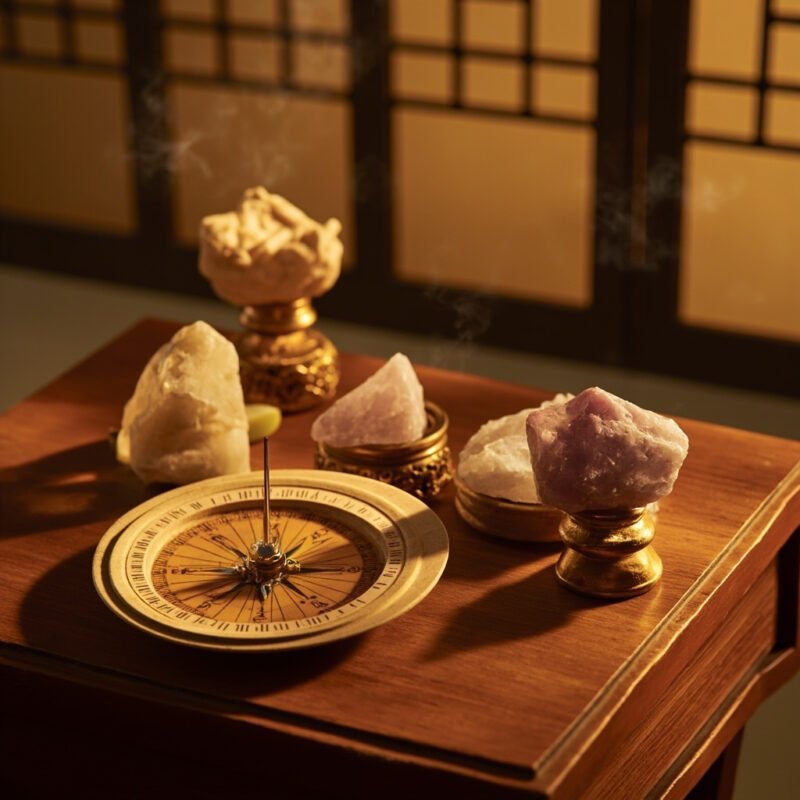
- Twenty-Eight Mansions Healing Crystal — Inscribed with the 28 mansion symbols for meditation and space cleansing. Each facet corresponds to a mansion, allowing targeted activation of celestial energies.
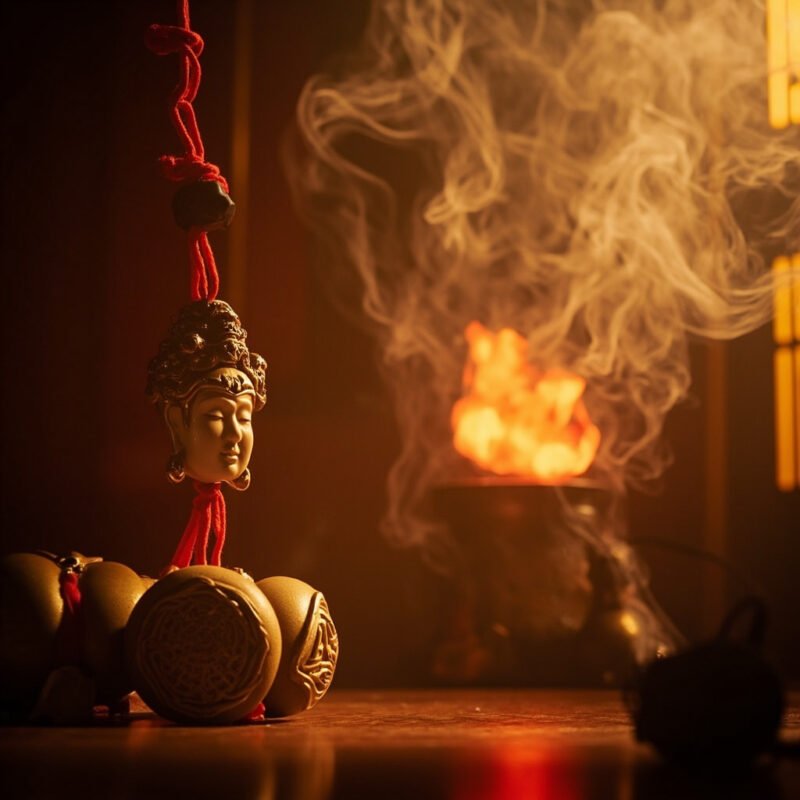
- Celestial Dragon Incense — Natural sandalwood and frankincense, traditionally burned during the Dragon hour (7–9 AM) to invite Azure Dragon star energy.
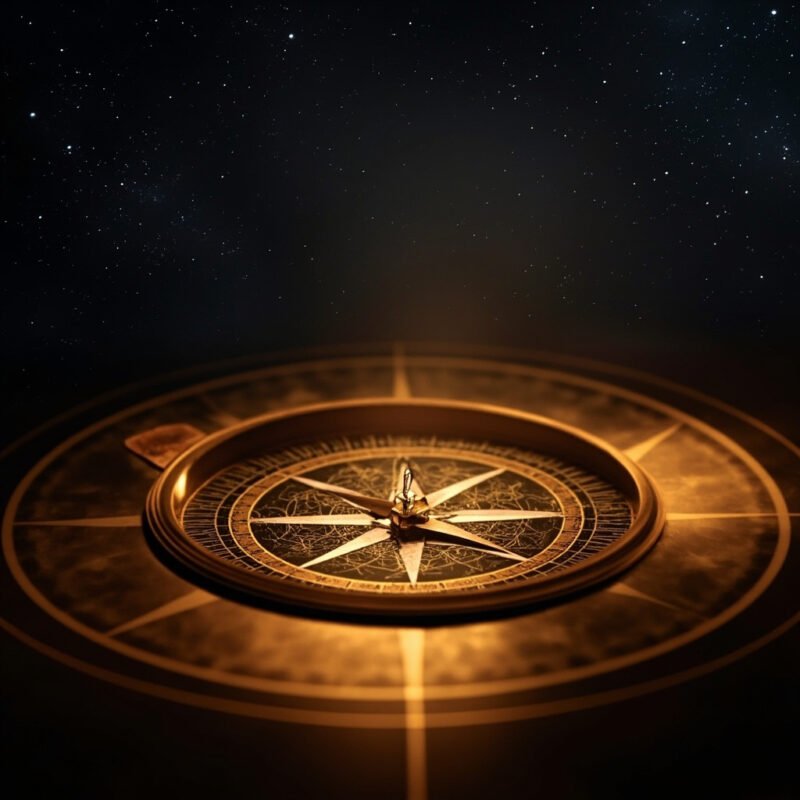
- Nine Star Qi Compass — A portable compass mapping nine celestial stars onto the eight directions. Ideal for maintaining cosmic alignment while traveling.
Tian Xing Feng Shui and Personal Energetic Development
Beyond physical space, Tian Xing offers a path of personal cultivation. Taoist masters teach that the body is a miniature universe with its own internal stars and energy channels. By meditating on the twenty-eight mansions and visualizing their light entering the body’s meridians, practitioners harmonize personal qi with the cosmos. Regular practice improves sleep, clarity, and emotional resilience.
A simple exercise: sit quietly at dawn facing east, and recite the names of the seven Azure Dragon mansions while breathing deeply. This aligns one’s energy with the renewing power of spring, regardless of season. Over time, one develops palpable sensitivity to changing celestial tides — a skill that deepens every other feng shui practice.
Why Tian Xing Feng Shui Matters Now
In an era of global uncertainty, Tian Xing Feng Shui offers a profound perspective: we are not separate from the cosmos but embedded within it. Every home and plot of land receives a unique inheritance of celestial energy. Learning to read it empowers individuals to create spaces that are both functional and energetically aligned with the greater universal order.
Whether you are a seasoned enthusiast or a curious newcomer, Tian Xing Feng Shui opens a door to one of China’s most sophisticated metaphysical arts. By incorporating its principles — through mindful space planning, Taoist energy tools, or personal meditation — you take an active role in shaping your destiny in harmony with the stars.
Visit Yihui Store to explore our curated collection of celestial feng shui products, including hand-crafted talismans, crystal healing tools, and authentic Taoist incense, each energetically charged to support your journey into the wisdom of the heavens.